
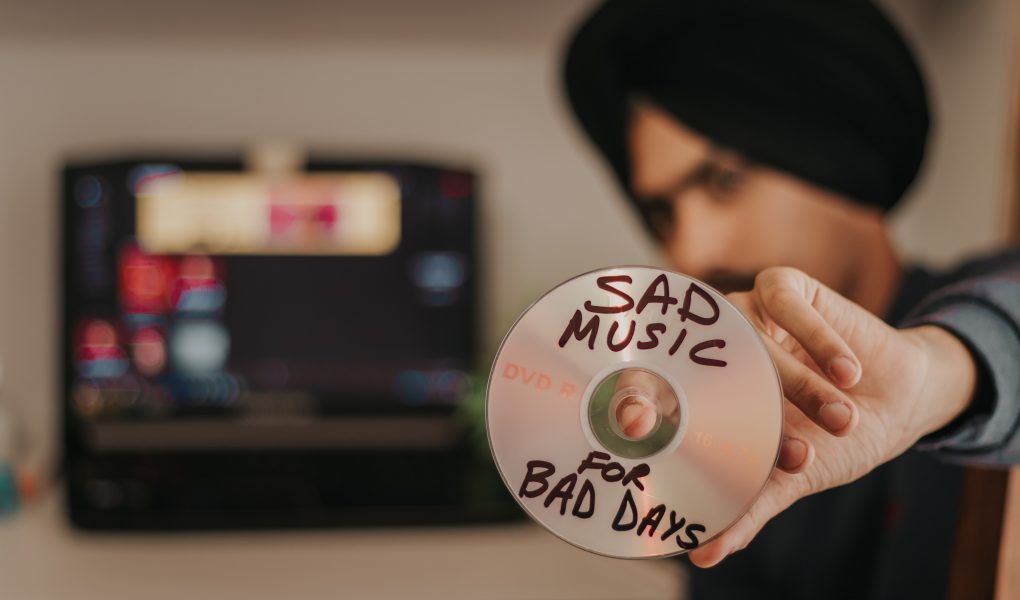
Ever wondered why the hell you freely choose to listen to sad music? Well, I did! When I first started listening to Opeth’s gloomy 2003 album „Windowpane“ I felt something strange: Relief. Like a warm hug in sadness. Ever since I have periods in my life where I crave melancholic music. This intrigued me so much that in this post I will explore the possible emotional psychology behind liking music that expresses heavy emotion.
Emotions as Frequencies
The highest frequencies most humans can perceive range in the spectrum of visible light which is up to 400 THz (terahertz). Anything above that frequency range like infrared light, micro waves or radio waves are usually automatically tuned out by the human brain, i. e. we don’t perceive them. This is super practical, because otherwise our modern world would be damn loud.
But what about emotions like sadness, joy or excitement? According to Fabian Parsia George et. al., each human emotion ranges in a specific frequency as well and can be detected by observing gamma, beta, alpha and theta frequency bands. In a conducted study, the team of computer engineers and scientists was able to detect specific emotions in participants using EEG (electroencephalogram) signals with a 92.36% accuracy. Another study by Zhilin Gao et. al. suggests „that emotion recognition is more associated with high frequency oscillations (51–100Hz) of EEG signals“. Just like light waves with a specific frequency are perceived by the eye, and then translated by the brain into colors, emotions are a bio-chemical feedback system with different frequencies that are then decoded and felt by our body.
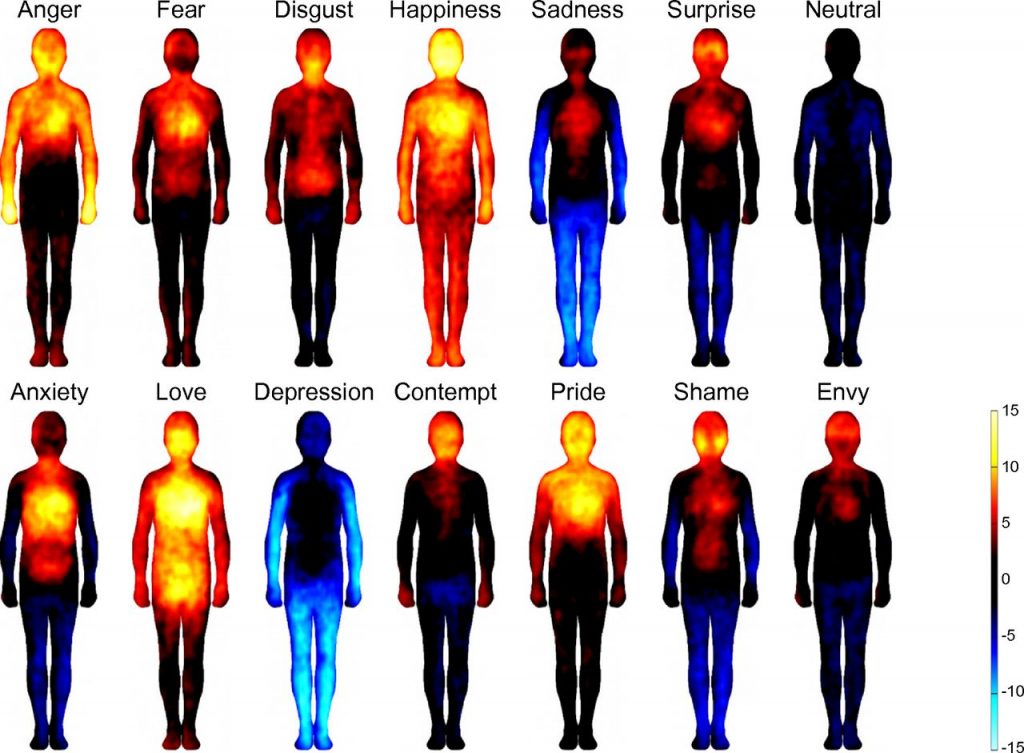
This chart by Lauri Nummenmaa et. al. shows each emotion and how they show up in the body for most people (read the study). What I like about this chart is that it doesn’t stack up emotions in a hierarchical manner becaume some people then conclude that one emotion is better than the other. And this couldn’t be further (!) from the truth.
However, this chart only takes a looks at one emotion at a time. In reality, our psyches are fragmented and we can feel multiple emotions at the same time without even being aware of it (read more about this here). This is a protective mechanism of the brain. So while we are happy in this moment, we may have parts that stay stuck in trauma and feel a certain emotion 24/7 e. g. anger. Just because you don’t consciously feel them in this moment, doesn’t mean they are not there. And this is where your childhood and music preferences come into play.
The Child’s Emotions
Depending on which associations we have formed with specific neurochemicals aka emotions, we react in different ways to it. For example, if we grew up in a family where the sentiments of being sad, angry or frustrated were ok, we are able to self-soothe in healthy ways or can open up to someone. Chances are that if you were a sensitive child you displayed a much bigger range of emotions than others. This increases the chance for having your emotions disapproved of, especially in a society that doesn’t really understand emotions in the first place.
To tip you of: How did your parents react when you cried as a child? Or when you balled your fists, kicked and screamed out of anger? Did they help you navigate the emotion making you feel like your emotions are valid? Or did they meet you with rejection, confusion, disapproval or shame? Answering these questions will give you insights on how you learned to respond to your emotions – and still do the same way even as an adult today.
The Power of Emotional Expression in Music
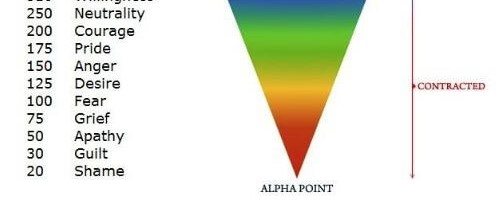
Many people like to listen to powerful music where artists express anger and frustration, like rap or metal. No wonder why: Anger is one of the strongest feeling improvements out of victimhood and powerlessness. In fact, a victim can not get to a state of happiness without moving to at least a certain degree of anger first. So, anger is in essence there to catapult you out of powerlessness. Like a forest fire, it tries to burn away what doesn’t serve you anymore. Even though you might be happy at surface level, you might have many parts stuck in a trauma loop that want to feel empowered. And this is what this music does for you. It feels empowering to you. This is also why, incomprehensible to many, metalheads state that heavy music relaxes them – because it brings emotional relief.
But What About Sad Music?
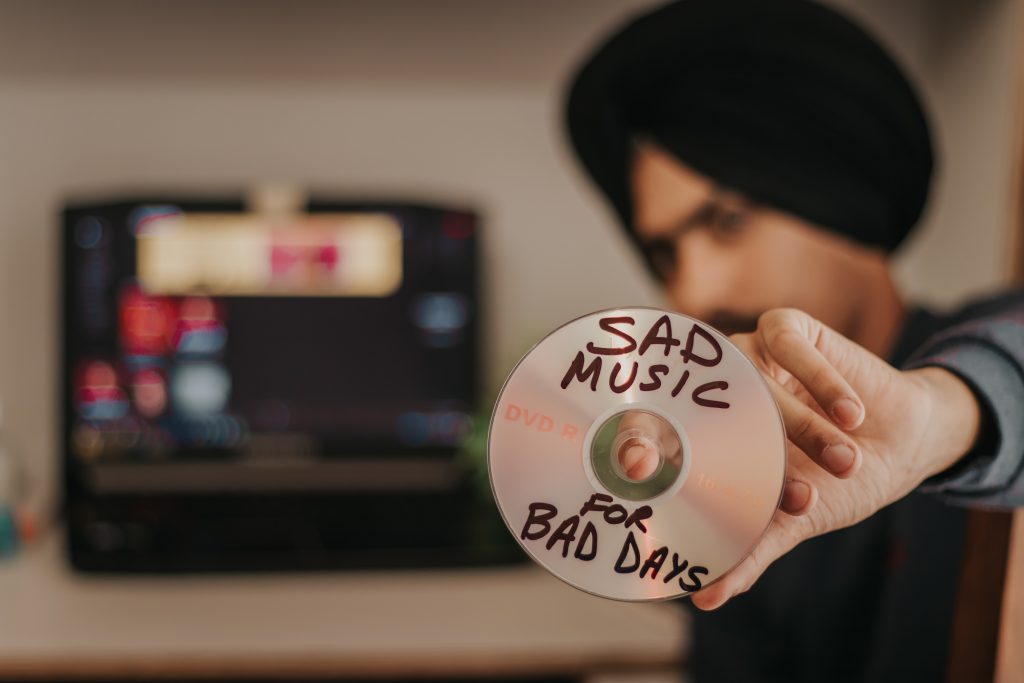
Many bands like Opeth or Alice in Chains ride a different sector of heaviness – sadness. How come people freely choose to listen to songs like “Windowpane” or “Rotten Apple”? The answer is simple – presence. I am making a bold statement: when most of us were little we were abandoned to some degree when we cried or felt deeply sad. People withdrew from us, either physically or emotionally. So we experienced no presence and validation for the emotion of grief or deep sadness. This means, there is a fragmented part within us yearning for presence in sadness. Validation means being seen – someone mirroring back to you “I see that you are sad and it’s ok”. Thus, music like “Windowpane” by Opeth is the warm hug in deep pain that we never had.
The Kaleidscope of Feelings
Many sensitive people are quite frustrated with the amount of emotional expression that is allowed in general society. But there is gold to be found in the turd: You often have incredible depth that can’t be matched by many. You can emphatize and understand other people in a minute because you can feel them. And you can create and value beautiful art that is filled with emotions to the brim. Even though it’s not yet commonplace, I advocate allowing all emotions, from joy and excitement to frustration and hopelessness. Which is easier said than done. But every single feeling serves a purpose and makes life the kaleidoscope it is. Don’t be ashamed for enjoying sad music either. It’s human.
Love, Frauke ♥




Great article! And gotta love Alice in Chains 🙂
Thank you so much! And yes 🤘!!